our new museum
Contact us | Museum opening times | Find us | Glossary of terms | Cookies policy
facebook
twitter
the mary rose
19th July 1545: when their world ended, our story began
  • Home
  • Your visit
  • Discover our collection
  • Archaeology and Conservation
  • Online Shop
  • Venue Hire
  • Become a Friend
The Mary Rose » Archaeology and Conservation » Conservation

Conservation

Opening times


April to October

10am – 5:30 pm (last tickets 4pm)

November to March

10am – 5pm (last tickets 4pm)

Closed 24th – 26th December

 
Story of the ship
 
Artefact database
 
Her crew
 

Though many artefacts were discovered in relatively good condition, excavation and subsequent exposure to air can threaten their stability, making it essential to develop relevant conservation treatments. The Mary Rose project led the way in techniques to conserve archaeological finds.

Sections of this page:
  • Passive storage
  • Fungi and microbes
  • Iron, copper and alloys
  • The use of PEG
  • Extraction of iron from waterlogged wood

Passive storage

Right from the start of the diving, archaeologists and conservators worked together to ensure that the artefacts found would not deteriorate. After recovery, artefacts were placed in 'passive' storage, to stop any immediate deterioration before the team actively conserved them.

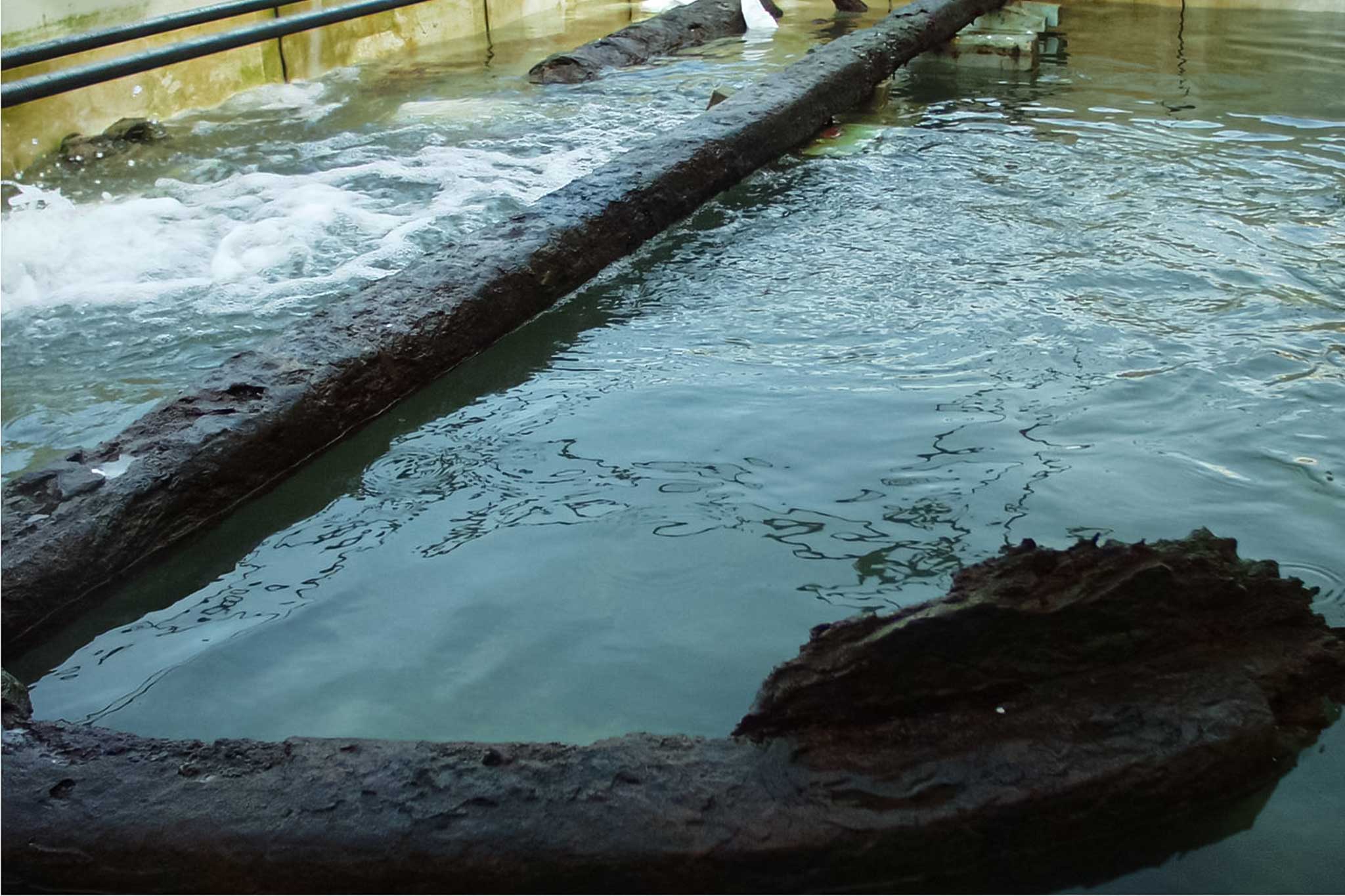
The passive storage used depended on what an object was made of. For instance, small wooden objects could simply be sealed in polyethylene bags to preserve their moisture, while timbers were stored in unsealed water tanks.

Fungi and microbes

The team prevented any growth of damaging fungi or microbes with a number of techniques, including low-temperature storage, chemicals and even the use of common pond snails, which eat wood-degrading organisms but leave the wood untouched.

Leather, skin and textiles were also put in passive storage, kept moist in tanks or sealed plastic containers. Bone and ivory were desalinated to stop any damage from salt crystallisation, as was glass, ceramic and stone.

Iron, copper and alloys

Objects made of iron, copper and copper alloys were kept moist in a sodium solution to prevent any oxidisation and reaction with any chlorides that had penetrated the surface. Alloys of lead and pewter are inherently stable in the atmosphere and don’t normally need any special treatment.

The use of PEG

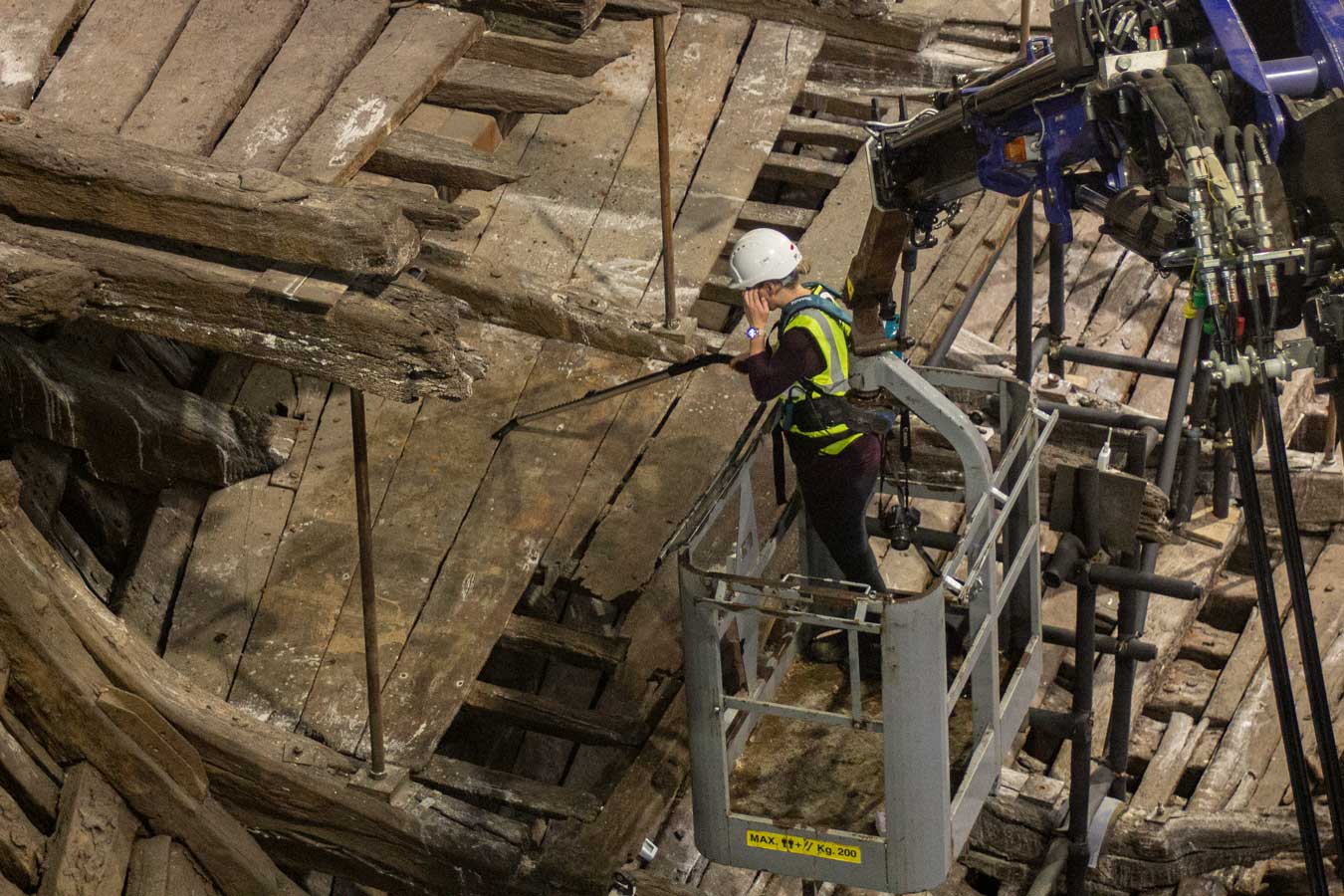
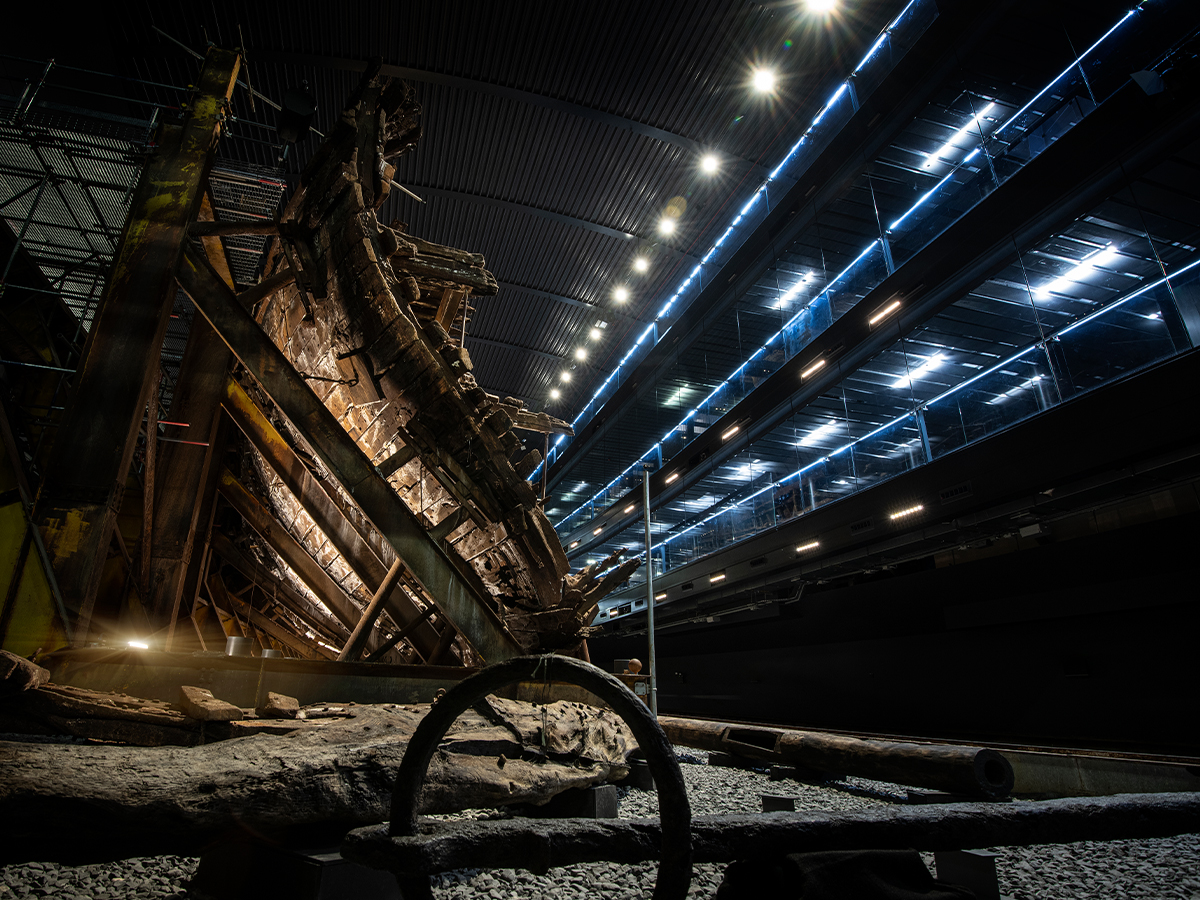
During passive conservation, the ship structure itself couldn’t be completely sealed for obvious reasons. Instead it was regularly sprayed with filtered, recycled water kept at a low temperature, which stopped it drying out, and prevented microbial activity. Without spraying, the wood would have shrunk by anything up to 50%, warping and cracking as the water evaporated from its cellular structure.

The conservation team then sprayed the hull with polyethylene glycol (PEG) to replace the water in the cellular structure of the wood. There were three distinct phases, with a low molecular weight PEG to begin with, then a higher weight to strengthen the outer layer of wood. Finally the hull will be carefully air dried.

Extraction of iron from waterlogged wood

The hull and many of the artefacts are susceptible to the development of acids which can destroy the wood structure. The acid originates from sulphur species incorporating into the wood whilst on the seabed which eventually can transform to acid when exposed to oxygen. This is particularly a problem in artefacts which originally contained iron, as the corroded iron has migrated into the wood and drives the sulphur reaction to form acid.

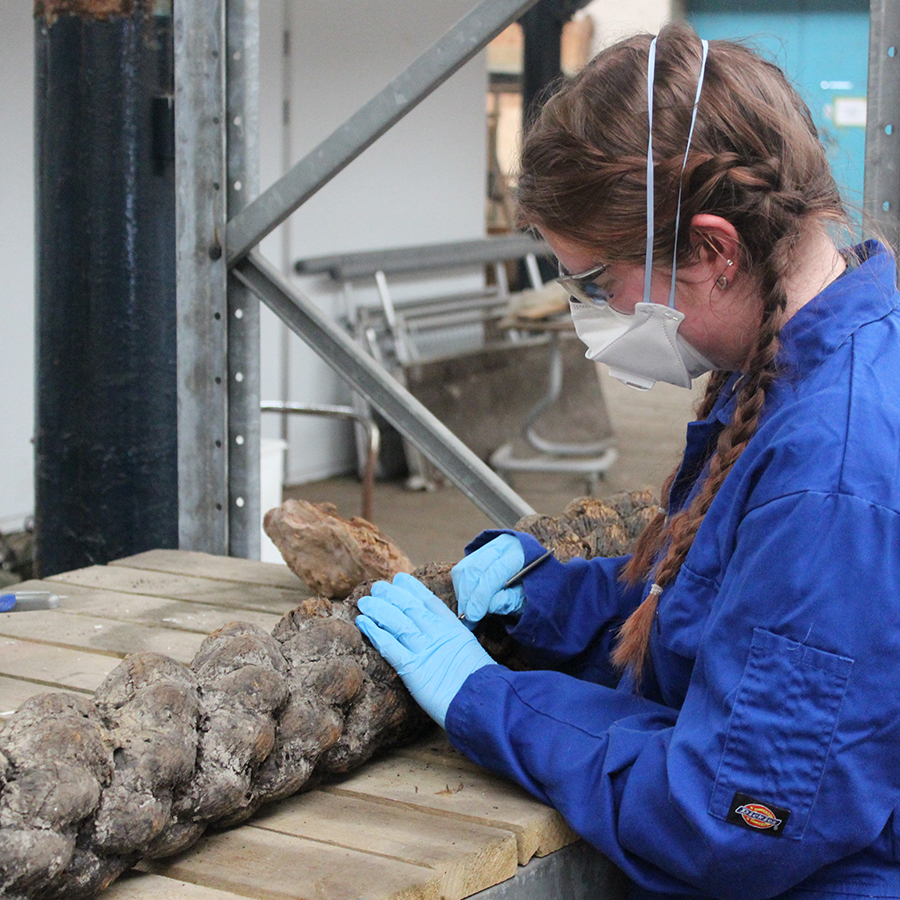
Therefore, a way to inhibit acid production is to remove the iron by reacting the wood with a suitable complexing agent. This method has been used extensively at the Trust as a surface treatment and it is now being explored as a submersion treatment for entire artefacts.

Application of Strontium carbonate treatments to artefacts which are showing the presence of sulphate salts.

Many of the waterlogged archaeological wooden artefacts have the potential to form acids due to the presence of iron and sulphur. The sulphur originates from biological reactions which occurred on the seabed and the iron is present due to the corrosion of original fixtures. While they were exposed to limited oxygen on the seabed these posed little threat but can form acid when exposed to oxygen for extended periods of time. Removal of iron is one way of treating this problem and is explored in another section. Another route is to neutralize the products. At the Mary Rose, a treatment of Strontium carbonate is being pioneered to neutralise acids and elements which have the potential to form acids if left unattended. A stable product is formed which can remain in the wood.

welcome trust
Stavros Niarchos Foundation
Liverpool Victoria
Heritage Lottery Fund
Hampshire County Council
Garfield Weston Foundation

Registered Company No.: 1415654 England VAT Registration No.: GB 339 0628 49 Registered Charity No.: 277503