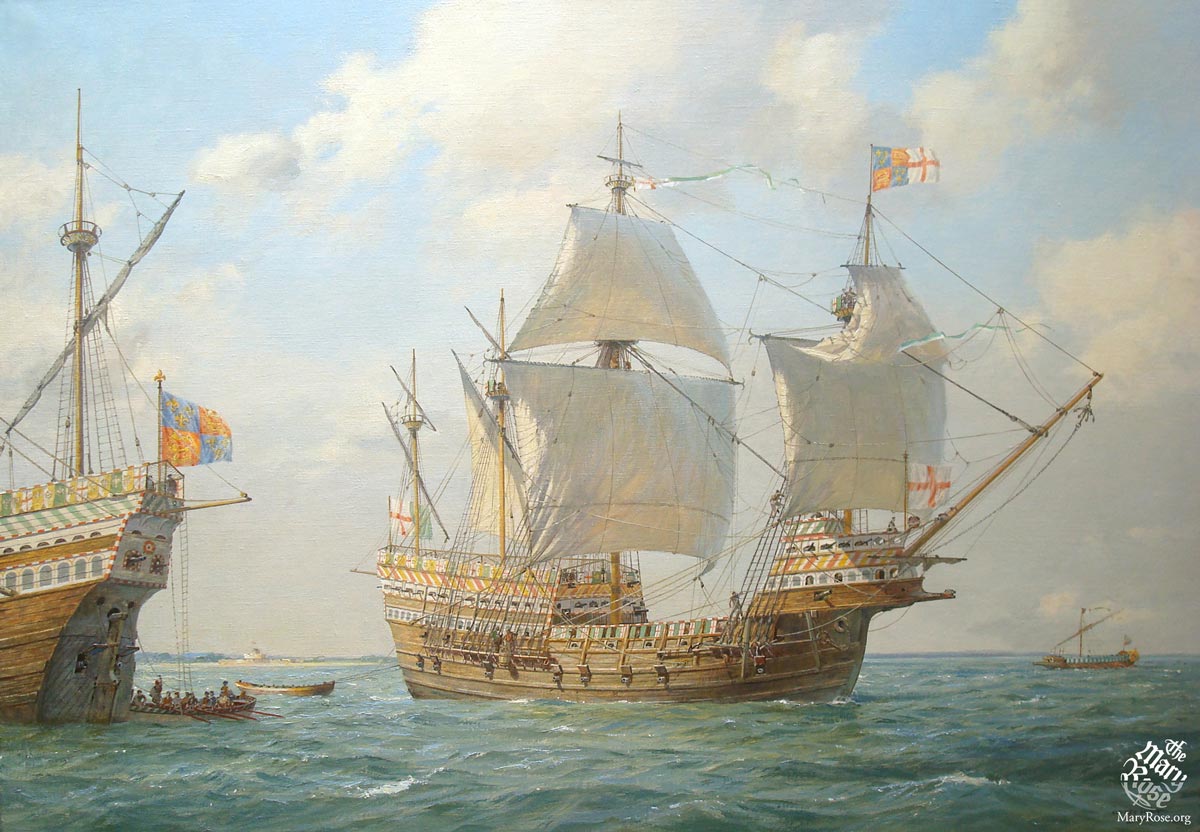
Thought that the Mary Rose sank on her maiden voyage? Think again…
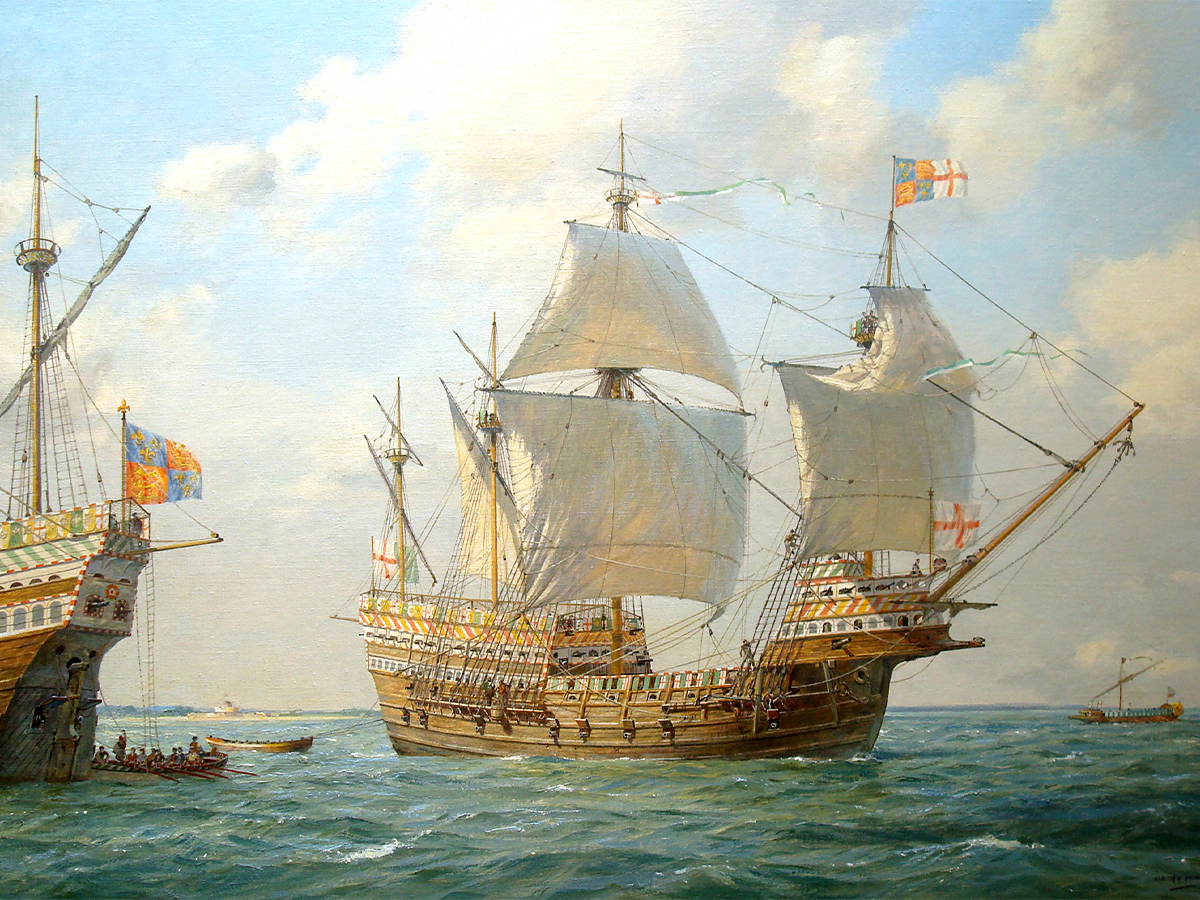
The Mary Rose was built in 1510-11 at the start of Henry VIII’s reign and was one of his favourite ships for 34 years, until it sank in 1545.
King Henry is credited as the founding father of the Royal Navy and established an impressive fleet, with many vessels – like the Mary Rose – being built in his dockyard in Portsmouth.
1510 – 1520
The birth of the Royal Navy
Henry VIII was an enthusiastic shipbuilder, whose pride in his “Army by Sea” would see his fleet grow from five at the start of his reign to 53 by the time of his death in 1547. While he may have had many ships, it is the Mary Rose that is remembered as his favourite. Notably, the life of the Mary Rose (1510-1545) coincides almost exactly with the reign of Henry VIII (r.1509-1547).
Before the development of a full-time Navy, English kings relied upon requisitioning merchant vessels in times of need. This was certainly cheaper than building, maintaining and manning ships in times of peace, but it was inefficient and difficult to mobilise. With the threat of Scotland to the north and France to the south, Henry VIII began to build his Navy as soon as he came to the throne.
Construction and war: 1510-1520
The Mary Rose and Peter Pomegranate
The earliest reference to the Mary Rose is 29th January 1510, in a letter ordering the construction of “two new ships”. These ships would become the Mary Rose and her ‘sister’ ship, the Peter Pomegranate. The ships were built in Portsmouth, at the dockyard established by Henry VII and what is now Portsmouth Historic Dockyard. This makes the sinking of the Mary Rose in the nearby Solent and her eventual resting place in Portsmouth’s Mary Rose Museum even more poignant.
The first account that names the Mary Rose is a letter from June 1511. It is often claimed that the ship was named after Henry’s sister, Mary Tudor but no evidence supports this. Instead, it was the fashion to name ships for saints and the pairing of the Mary with the Peter supports this. The badges of the ships – the Rose and the Pomegranate – celebrate the royal couple; the rose being the symbol of the king, and the pomegranate being that of his first wife, Katherine of Aragon. Neatly, the Virgin Mary was known at the time as the ‘Mystic Rose’; the name of the Mary Rose therefore signifies not only the power of the Tudor dynasty, but also that of the Virgin Mary.
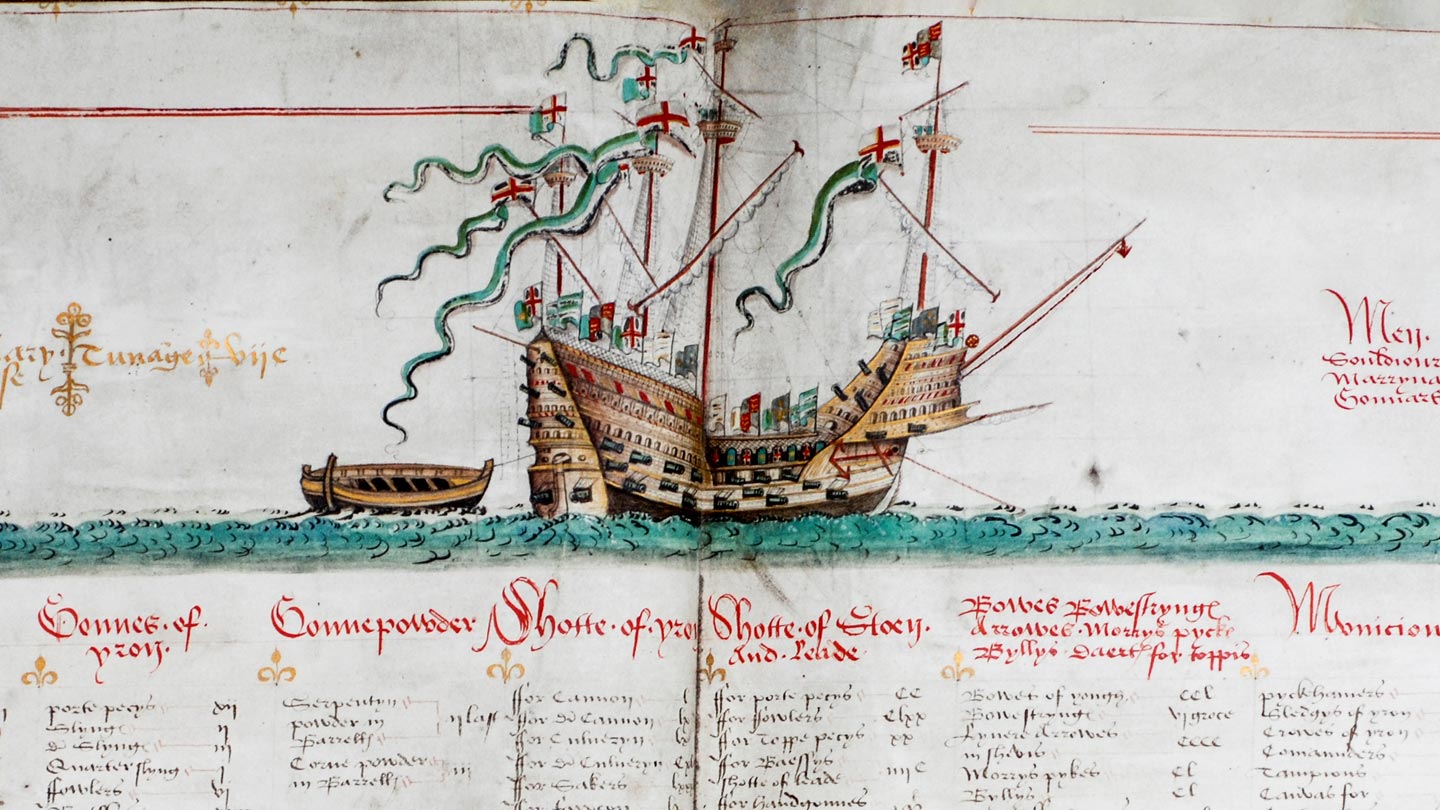
The Mary Rose was larger than her sister ship – 600 tons to the Peter Pomegranate’s 450. Both vessels were designed to carry a small number of heavy ‘anti-ship’ guns and a much larger number of smaller ‘anti-personnel’ guns. Six months after the launch of the Mary Rose, Henry VIII was at war with France; the nineteen-year-old king wanted to show his mettle against the might of France. Against the advice of his father’s old advisers, Henry VIII declared war in 1512.
The Battle of St Mathieu
While the Mary Rose was not the largest of Henry’s ships – the 1000-ton Regent, built in 1487 held that position – it was the Mary Rose that the Admiral of the Fleet, Edward Howard, picked as his flagship. This was to be a matter of significance in the Battle of St Mathieu on the 10th August 1512.
In the weeks leading up to the battle, Howard led successful raids along the coast of Brittany, capturing 40 French ships and sacking French towns. He returned to Portsmouth in late July to resupply where he was visited by the king. On the 6th August, Howard received word that the French navy had mobilised and he left Portsmouth to return to Brittany.
The French did not expect the English to arrive for several more days and were celebrating the Feast of St Lawrence when the English fleet arrived. Many French officers were celebrating the saint’s day on land, while local dignitaries and their families were feasting aboard the fleet. Upon seeing the English fleet, the majority of the French ships fled, their retreat guarded by the French flagship, the Grand Louise, and the Marie-la-Cordelière.
The Mary Rose drew first blood; she shot out the mainmasts of the Grand Louise, killing 300 men and taking the ship out of commission. This short engagement is the earliest record of the Mary Rose firing her guns in battle.
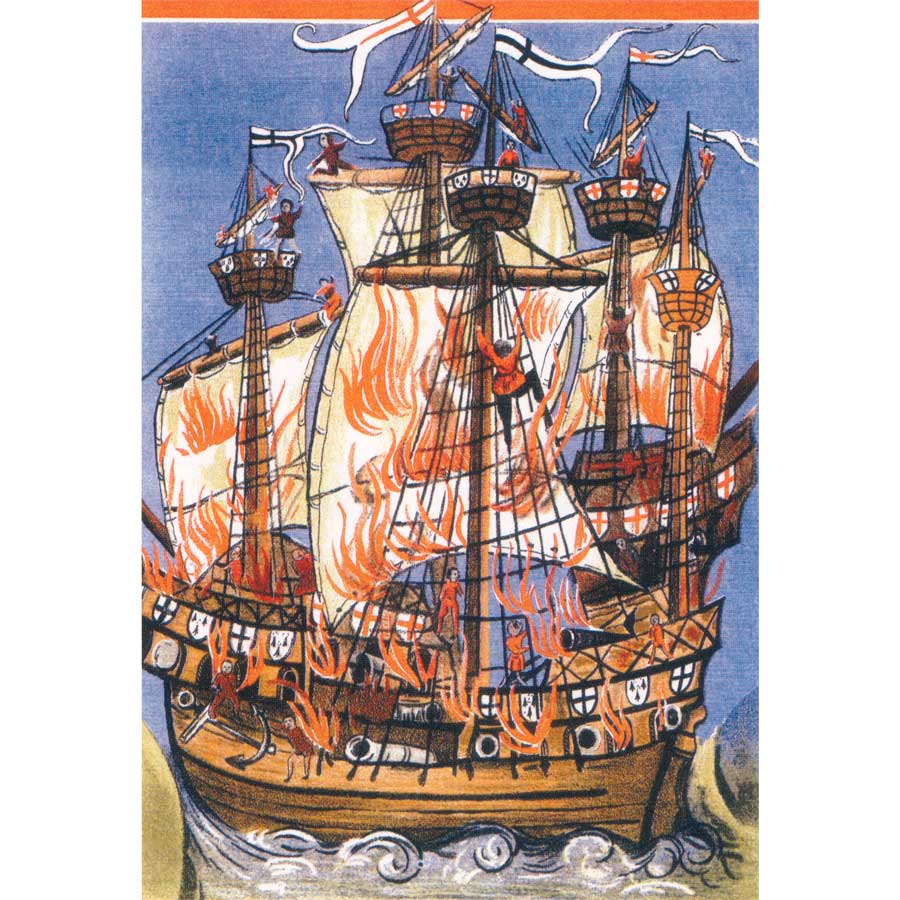
Despite this historic action, the most dramatic action of the day did not include the Mary Rose. While the Mary Rose was engaged with the Grand Louise, the 1000-ton English Regent grappled with the Cordelière. As with many of the French ships, the Cordelière was hosting families as the English fleet arrived and her captain, Hervé de Portzmoguer, made the hard decision to fight with civilians on board. Archers from the Regent engaged crossbowmen from the Cordelière and soldiers from both sides boarded each other’s ships. During this the gunpowder magazine of the Cordelière exploded. Flames spread to the Regent and both ships went down. Only 120 of the 800 men on board the Regent survived, and only 20 from the 1,500 on the Cordelière.
The fleet race
In September 1512, the campaigning season came to an end. The Mary Rose returned to England and moored in the Thames throughout the winter.
She did not sit idle for long, however. In March 1513, Admiral Howard organised a race of the fleet along the coast of Kent to test their abilities. The Mary Rose finished half a mile ahead of the Sovereign, the next fastest ship, with Howard declaring that the Mary Rose
“is the noblest ship of sail and great ship at this hour that I trow be in Christendom”.
The death of Admiral Sir Edward Howard
In April 1513, the English fleet, including the Mary Rose, returned to harass the French coast at Brest. The French retreated, taking a defensive position against the English. Itching for a fight, Howard entered several skirmishes, anxious to achieve some sort of victory.
On the 22nd April 1513, the French attacked the English fleet, sinking one ship and badly damaging another. Howard retaliated three days later on the 25th, leading a force to board the galley of the veteran French commander Prégent Bidoux. Howard was last seen shouting “Come aboard again! Come aboard again!” to his men before he was cut down.
Demoralised after the death of the Admiral, the English fleet fled back to Plymouth. Lord Thomas Howard, older brother of Sir Edward, was appointed Admiral of the Fleet choosing the Mary Rose as his flagship. Lord Thomas Howard would later become the third Duke of Norfolk, and was uncle to both Anne Boleyn and Katherine Howard.
The Battle of Flodden
The next significant moment in the Mary Rose’s career was her involvement in the preparations for the Battle of Flodden Field. While Henry VIII was campaigning in France, King James IV of Scotland made the most of the opportunity and led an invasion of England.
Katherine of Aragon, in her role as queen regent, successfully organised the defence of the north with the assistance of the Earl of Surrey, father of Lord Thomas Howard. The Mary Rose was part of this victory as a troop ship transporting men to Newcastle. King James IV of Scotland died at the Battle of Flodden Field on 9th September 1513.
By 1513, enthusiasm for the war was diminishing on both sides. Skirmishes continued until a peace was signed, with the Mary Rose involved in the final fighting of the war on the 14th June 1514. On the 9th October 1514, a peace between England and France was officially sealed with the marriage of Henry’s sister, Princess Mary Tudor, with King Louis XII of France.
In July 1514, the Mary Rose, along with most ships in the king’s navy, was decommissioned in Deptford. This saw the dismantling of the masts and rigging, the removal of anchors, pulleys, and other such equipment, as well as the removal of the armaments of the ship.
The Mary Rose briefly returned to service in June 1520 as Henry mobilised his most prestigious ships to escort him to France for the meeting of the Field of Cloth of Gold. This meeting between Henry and Francis I of France was a glamorous display of the wealth and grandeur of the two countries, as the two rival kings attempted to find solutions to their differences and prevent future wars. Everything about the meeting was designed to awe the opposition. As such the inclusion of the Mary Rose in the king’s escort was inevitable.
1520 – 1536
Favourite of the fleet: 1520-1530
In 1522, just two years after the Field of the Cloth of Gold, England and France were at war once again, with Henry siding with Charles V of Spain, the nephew of Queen Katherine. In May 1522, Charles arrived in England. At 2pm on the 30th May 1522, the two kings boarded and inspected the Henry Grace a Dieu and the Mary Rose; Henry was showing off his favourite ships.
Shortly afterwards, the fleet set off from Southampton. Lord Thomas Howard, now the Earl of Surrey, again took the Mary Rose as his flagship; the superior sailing of the Mary Rose trumped the largest (and newer) vessel the Great Harry. Surrey successfully attacked the Breton port of Morlaix on 1st July 1522 but the supplies that he requested to take Brest never arrived. He had no choice but to return to Portsmouth. The Admiral was redeployed and given command of a land force at Calais at this point; the Vice-Admiral, Sir William Fitzwilliam, also chose the Mary Rose as his flagship. The Mary Rose had now been the preferred ship of Sir Edward Howard, Lord Thomas Howard and Sir William Fitzwilliam.
The second war with France was mostly a collection of skirmishes, with very little happening until 1525 and the land Battle of Pavia, which ended the war. The English, however, had nothing to do with Pavia, which saw King Francis captured by Spanish forces. The fleet does not seem to have been mobilised at all throughout 1525 and the Mary Rose was moved to Deptford that summer to be recaulked.
The Mary Rose was largely inactive for the first five years of the 1530s.
1536 – 1540
From January 1536 to March 1537, the MaryRose could be seen in the Thames without her masts. As tensions mounted in Europe because of Henry’s break from the Church of Rome, Henry began reinforcing his warships and the Mary Rose underwent a refit. Extra gunports were added, and the sides of the ship were strengthened in order to accommodate the extra weight.
Unfortunately, the new alterations to the MaryRose may have affected her sailing capability. In April 1537, Vice-Admiral John Dudley reportedly that some of the ships were “unweatherly” and that “the ship that Mr Carew is in” was particularly bad. While it’s not clear which ship “Mr Carew” was on, George Carew was the captain of the Mary Rose when she sank eight years later; it is not impossible that the problematic ship was the Mary Rose.
In 1539, Henry mobilised the fleet once more, in fear of a joint invasion from France and Spain. Henry had been excommunicated by the Pope for declaring himself Head of the Church of England and he feared the Catholic powers of Europe would attack. In the summer of 1539, the Mary Rose was anchored at Deptford, ready to defend the Thames.
“…overseen with ale…”
On 11th June 1539, while the Mary Rose was anchored in Deptford, four of the ship’s custodians, went drinking in London, and had a night that ended up in the records of the High Court of the Admiralty…
Henry’s fears of a combined Franco-Spanish invasion came to nothing as the treaty between Francis and Charles fell apart by 1539. However, Henry’s fleet remained prepared throughout the campaigning months of 1539-1542.
In June 1542, Henry entered an alliance with Charles of Spain against Francis, thus beginning Henry’s last war with France. The reasons for Henry entering this war are unclear, although it is worth noting that his fifth wife, Catherine Howard, had been found guilty of adultery and executed just four months previously; perhaps Henry was desperate to prove his power and masculinity in the face of this humiliation.
It is not known whether the Mary Rose was part of the fleet that took Henry himself to Calais in 1544, although it is likely, since most of the fleet was involved. In September 1544, Henry captured the French town of Boulogne. However, his alliance with Charles of Spain fell apart and England was left isolated against France. The French retaliation for Boulogne was to prove fatal for the Mary Rose.
The Battle of the Solent: July 1545
Claude d’Annebault, the French Admiral, gathered over 200 ships in the estuary of the River Seine. This fleet was significantly larger than the Spanish Armada that arrived on our shores nearly 50 years later, which totalled 130 ships. Against this number, the English amassed around 80 ships.
John Dudley, Viscount Lisle, was Lord Admiral of the Fleet and he did not intend to sit wait for the French attack. Lisle sent fireships in amongst the anchored French fleet at Le Havre to burn the French ships; the French flagship, the 100-gun Philippe, burned. Ominously for the French, the next ship chosen to hoist the Admiral’s flag then ran aground and had to be abandoned.
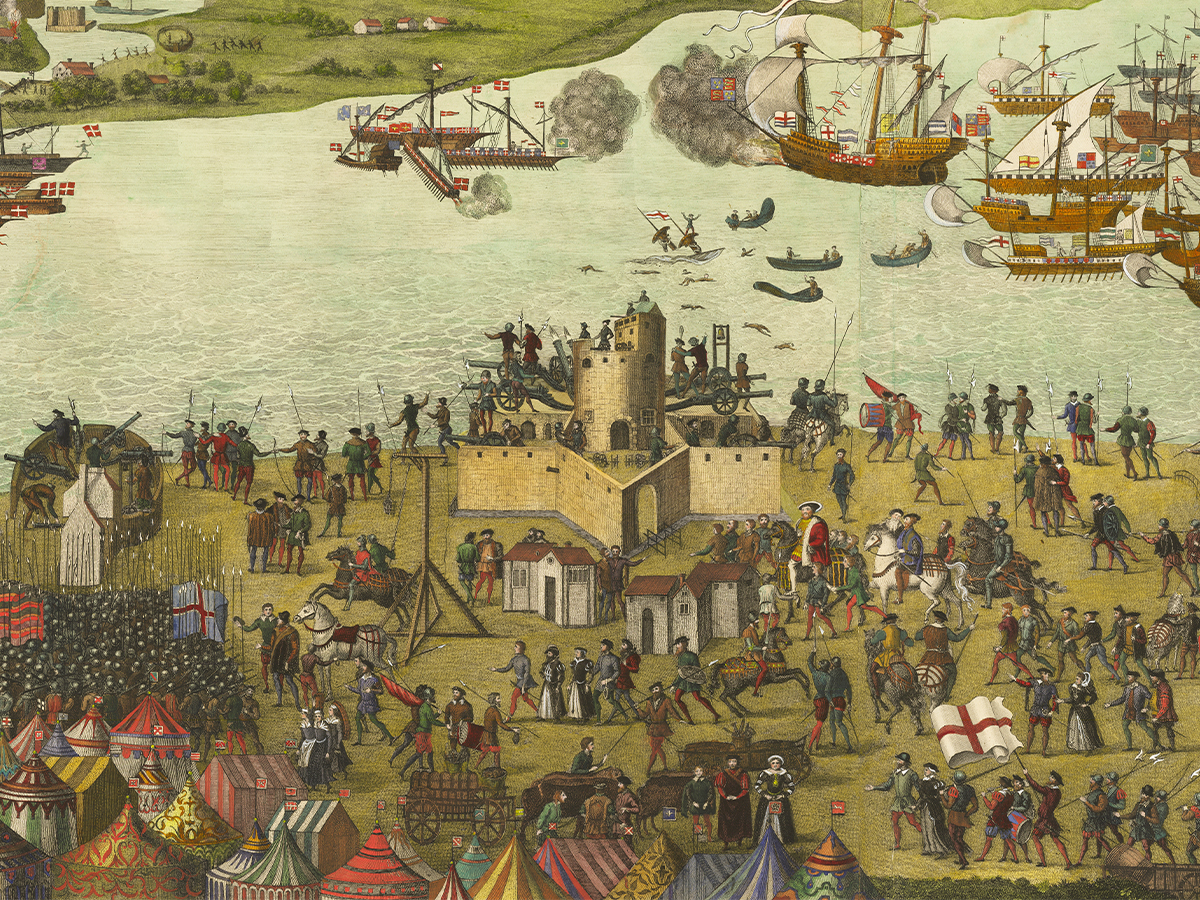
On the 12th July 1545, the French set sail, reaching the Sussex coast on the 18th. After an insignificant raid in Sussex, the French fleet entered the Solent landing troops on the Isle of Wight. D’annebault’s arrival seems to have taken the English by surprise. Henry VIII was dining on his flagship, the Henry Grace a Dieu when the French were sighted. With him were the Lord Admiral and the other captains, including Sir George Carew, Captain of the Mary Rose and Vice Admiral of the fleet.
Before leaving ‘hurriedly’ for shore, the King had ‘secret talks’ with the Lord Admiral and Sir George Carew, and “took off his chain from his neck with a great whistle of gold pendent to the same, and did put it around the neck of the said Sir George, giving him also therewith many good and comfortable words.”
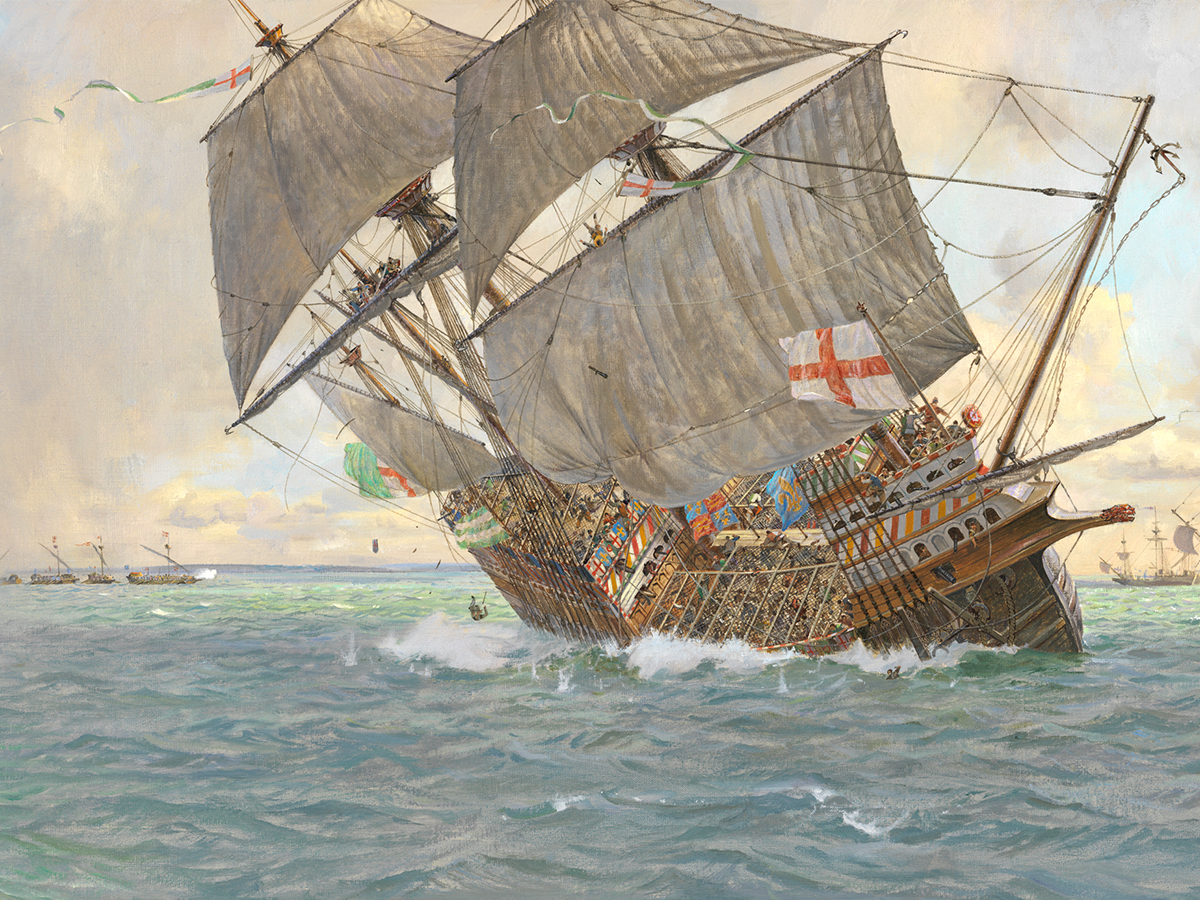
Henry watched from Southsea Castle as the battle progressed. Lack of wind gave the French the advantage, their oared galleys were able to advance, fire, and then retreat whilst the English sailing ships were immobile. Towards the afternoon, however, the wind rose, and Lisle led out his large ships, including the Mary Rose.
In a report to Charles V, written in code, Francois van der Delft, Imperial Ambassador and an eyewitness to the battle, wrote:
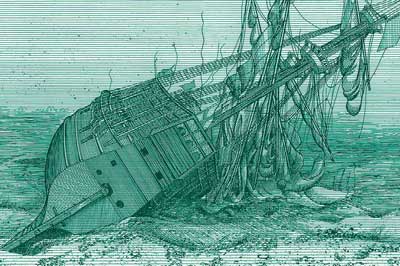
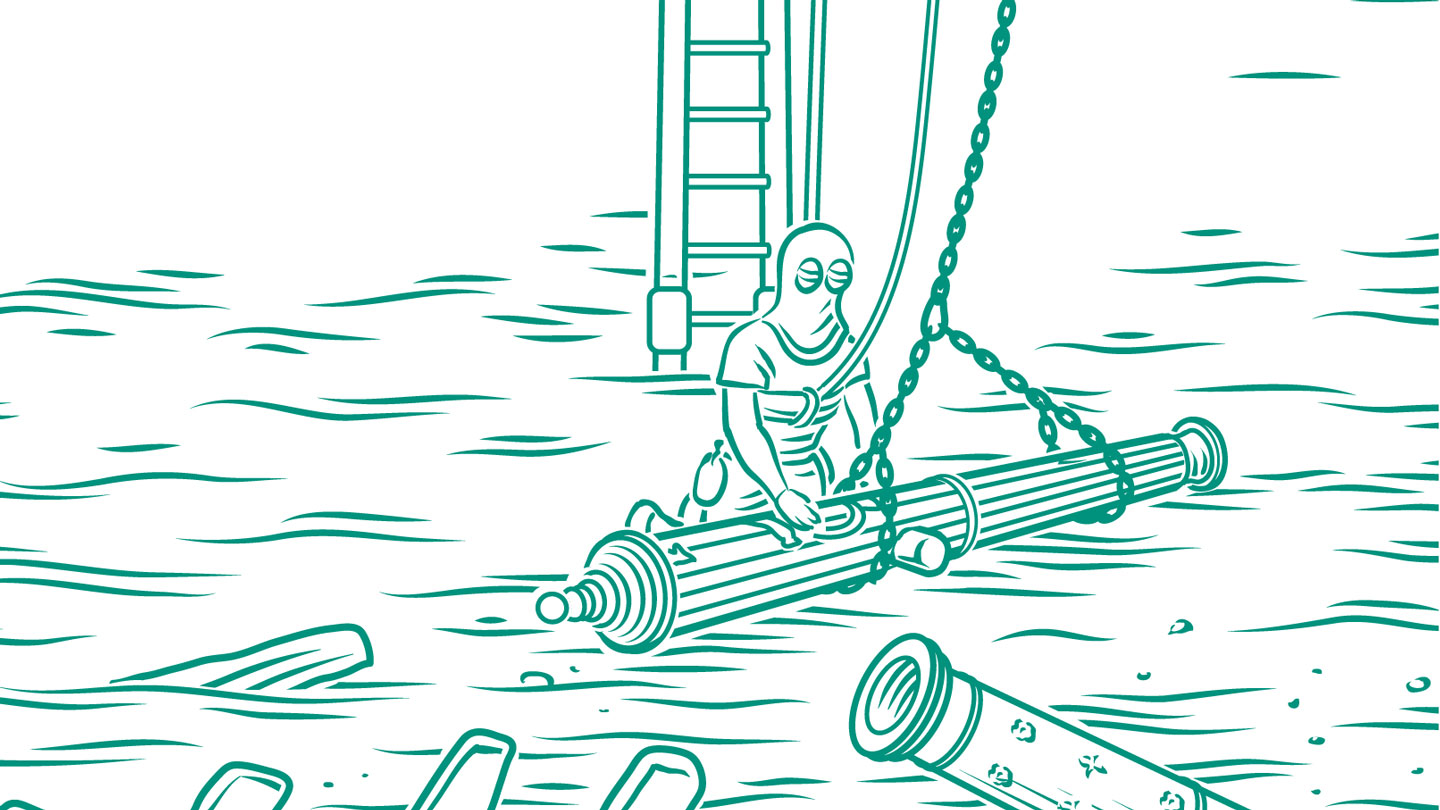
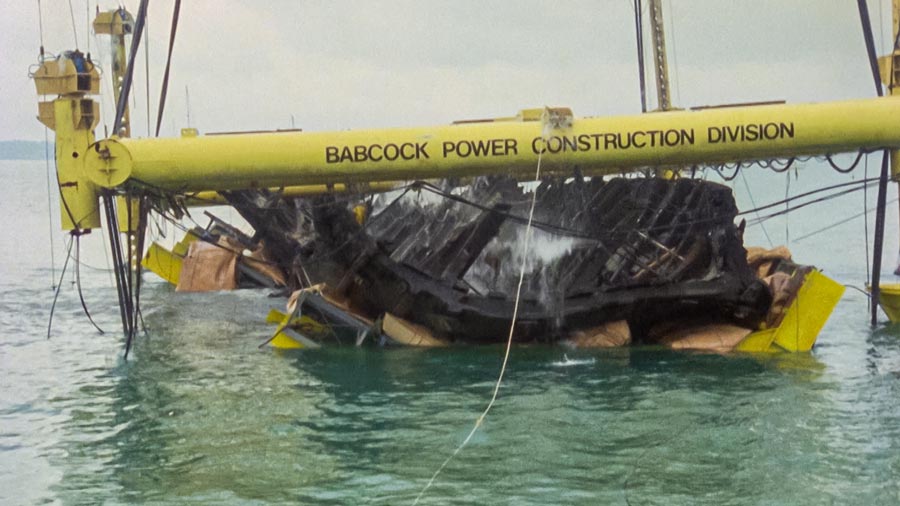
“Towards evening, through misfortune and carelessness, the ship of Vice Admiral George Carew foundered, and all hands on board, to the number of about 500, were drowned, with the exception of five and twenty or thirty servants, sailors and the like, who escaped . I made enquiries of one of the survivors, a Fleming, how the ship perished, and he told me that the disaster was caused by their not having closed the lowest row of gunports on one side of the ship. Having fired the guns on that side, she was turning in order to fire from her other, when the wind caught her sails so strongly as to heel her over, and plunged her open gunports beneath the water, which floored and sank her. They say however that they can recover the ship and guns”.
The change in wind together with a change in tide gave the English an advantage, and they bore down on the galleys causing them to retreat towards St Helen’s Point on the isle of Wight. Over the next few days the two fleets sat in a deadlock in the Solent. At some point 17 galleys again came forward to fight and one was sunk by English gunfire. On the 23rd July 1545, d’Annebault made the decision to retreat.