The Cook had a very important job on board, preparing two meals a day for the hundreds of men on the ship plus more elaborate dishes for the officers.
Who was he?
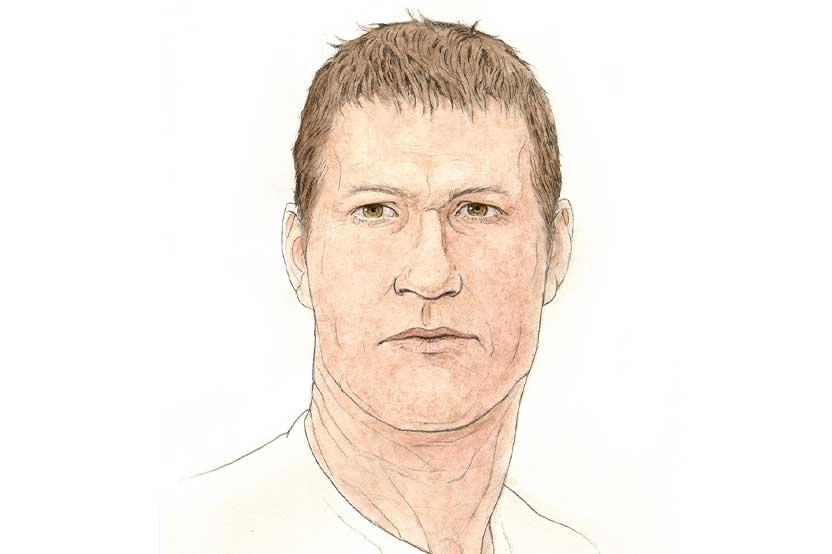
At least three men were discovered in the galley (where food was prepared and cooked) in the hold of the ship. It is likely that they were part of the cook’s team, perhaps the Cook himself.
One man was found with a small number of coins, a comb, dagger, knife and spoon. He was between 26 and 35 years of age and around 1.68m (5ft 6in) tall.
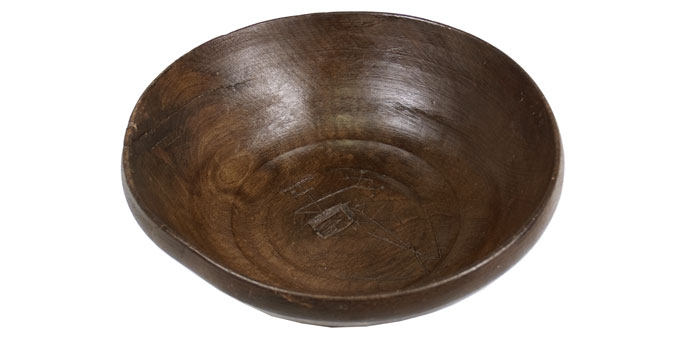
We believe that the Cook’s name may have been Ny Coep, as a bowl was found on the upper deck with ‘NY COEP COOK’ scratched onto it.
Studying his bones, we think that he had once been a member of a gun crew, doing lots of heavy lifting, until he damaged his knees.
The galley (the ship’s kitchen)
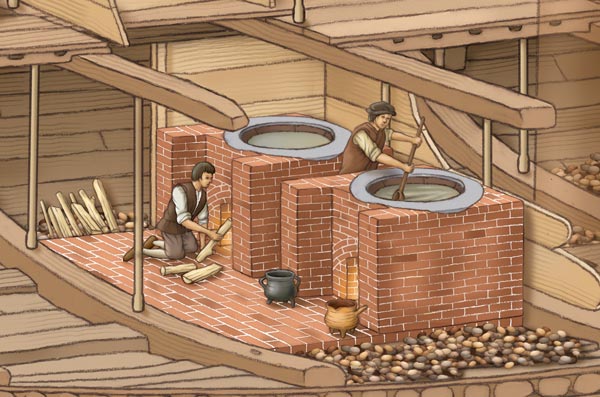
There were two large, brick-built ovens in the galley, each with a huge brass cauldron on the top. Meat and fish were boiled in these. The cauldrons had a lead lip around them. We now know that lead is poisonous, so that wasn’t a good idea!
This is what we think the galley looked like when it was in use.
The walls and floors of the ovens are made of brick. They sit on the gravel ballast that was put in the hold of the ship to help keep her stable. The sides and back of the ovens were supported by strong wooden walls.
The galley didn’t have a chimney. Instead, the smoke was trapped in a box-like area above the ovens, where it could be used to flavour fish and meat.
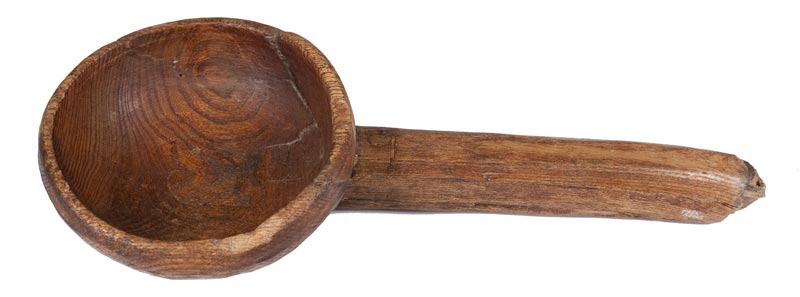
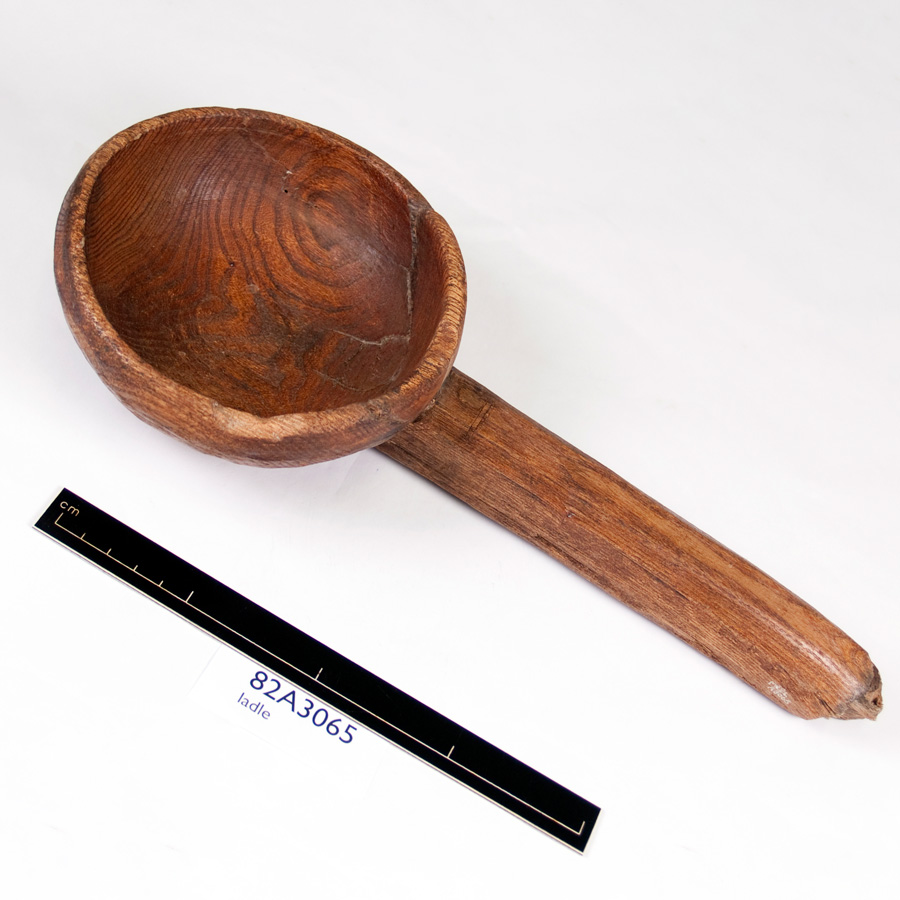
Ladle (broken)
The ladle was used to scoop the food out of the cauldrons.
It would have had a really long handle, allowing the cook to get to the bottom of the cauldron – ours has broken off!
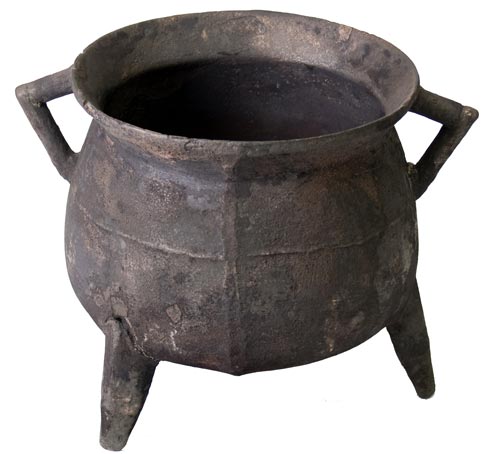
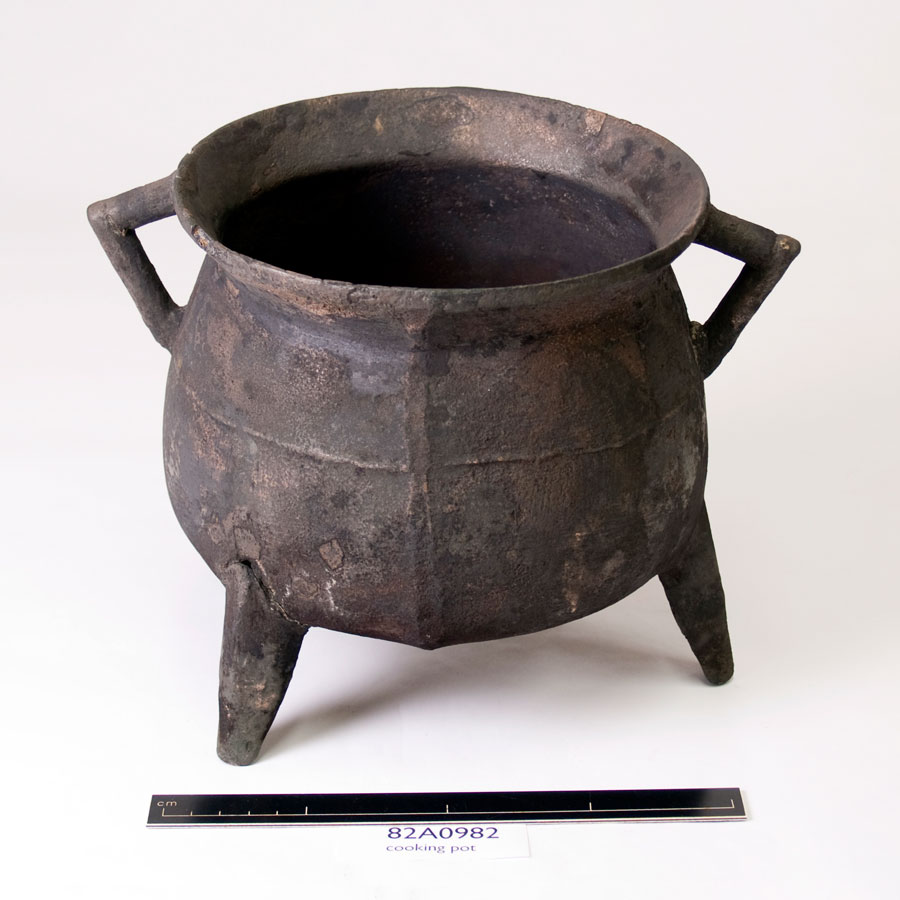
Cooking pot
This little cooking pot was probably used for cooking meals for the senior officers.
It had three legs so it could be heated by standing it in the glowing embers of the fire.
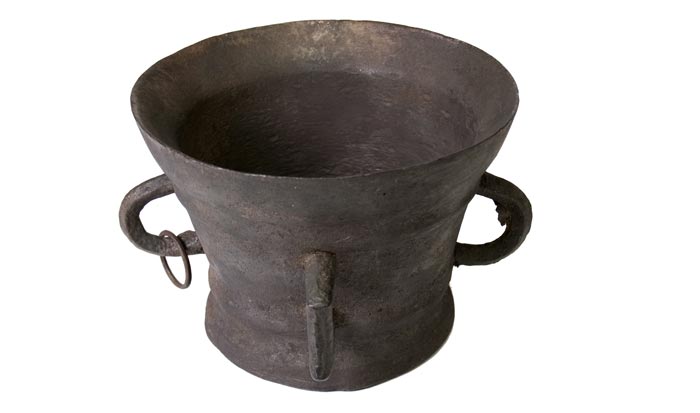
Mortar
The mortar is a heavy bronze bowl used with a metal stick called a pestle for grinding herbs and spices to add flavour to the officer’s food.
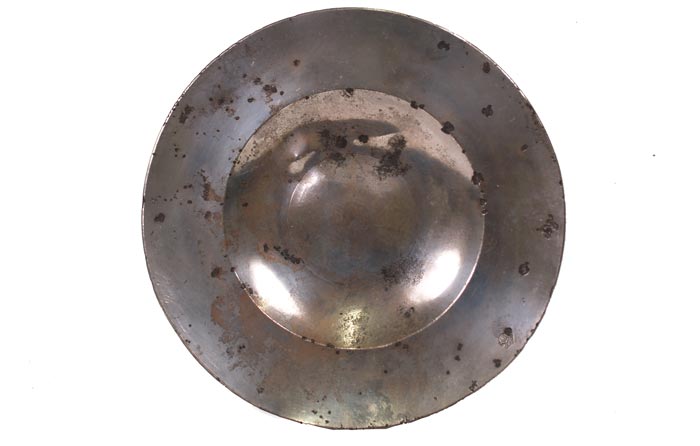
Officer’s plate
This is one of the officer’s plates found on the Mary Rose.
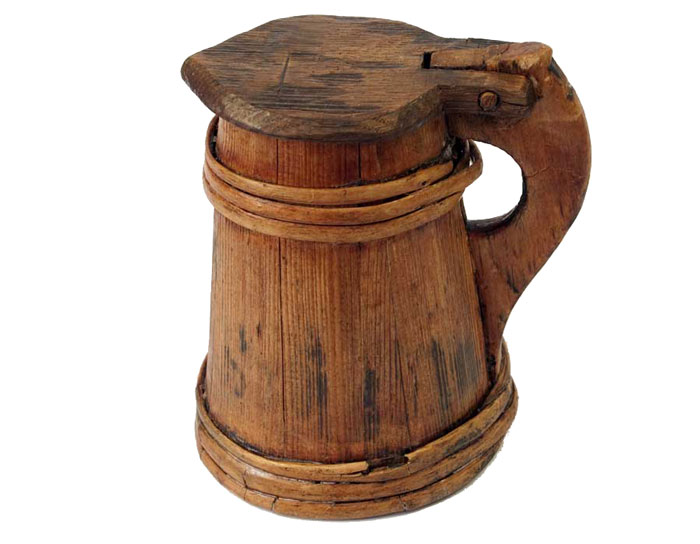
They didn’t usually take their best plates on-board ship. They took pewter plates and drank their wine and beer from pewter tankards.
Pewter is a mixture of tin and lead and looks like silver when it is polished.
Crew bowl
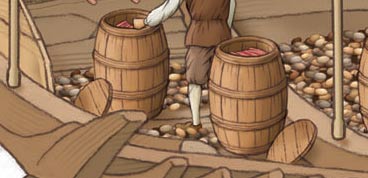
87 wooden bowls, 58 wooden dishes and 144 wooden plates were recovered, many from within barrels near the galley.
This one features personal marks made by the man who owned it.
Feeding the men
The crew of the Mary Rose ate from wooden plates, dishes and bowls. Like the officers, they used knives, spoons and their fingers to eat.
Tudor sailors lived mostly on salted beef, salted fish and ship’s biscuits. They had meat four days a week and fish on the other three. We know the crew ate other foods like cheese and butter, but we didn’t find any on the Mary Rose.
Beef
The English were famous for their love of beef.
It was one of the main parts of the mens’ diet on the Mary Rose. Each man got about a kilo of meat every day.
As there were no fridges or freezers in Tudor times, meat was salted and packed in barrels so it would last a long time.
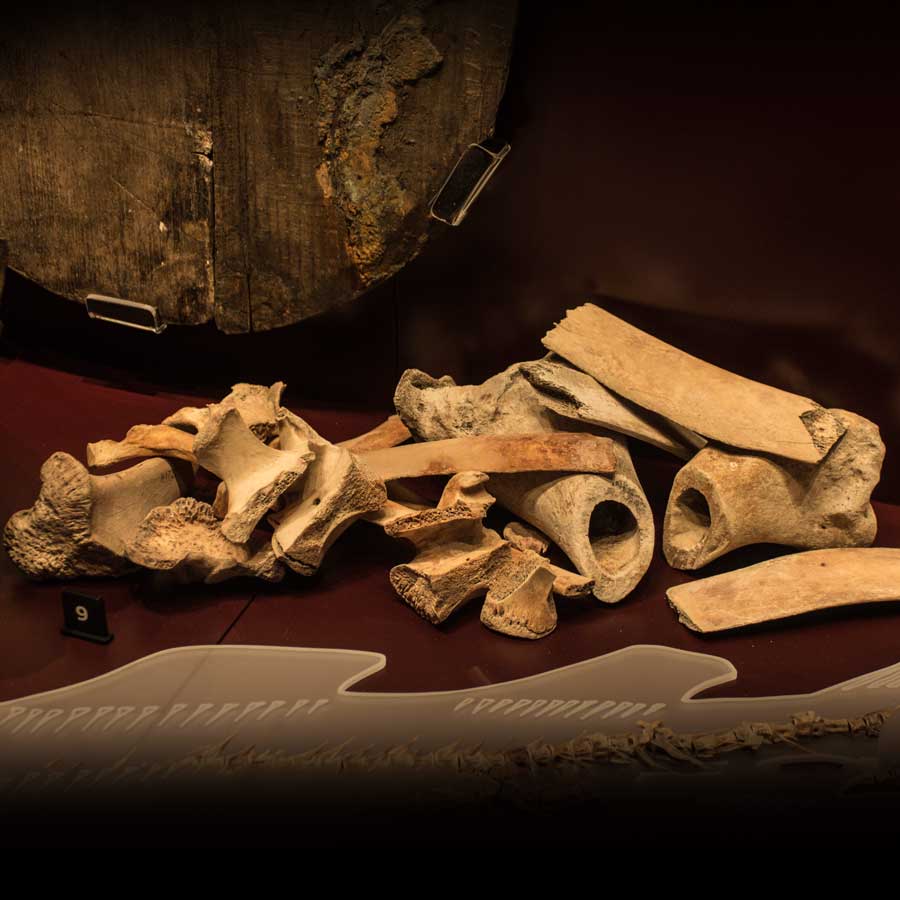
Barrels full of cattle bones were found on the orlop deck of the Mary Rose.
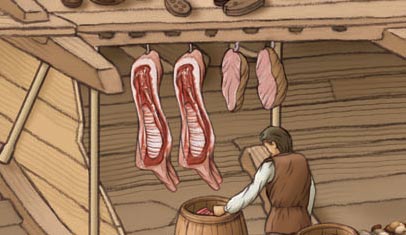
Pork
Lots of pig bones were found on the orlop deck.
These bones weren’t found in barrels. They might have been fresh supplies or salted and hung up.
From the way it was stored, it’s possible that pork was going to be their main meal the next day.
Bread and biscuits
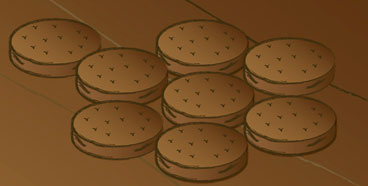
Ordinary bread wouldn’t keep very well on board ship, so the navy had special bread made.
Ship’s biscuits are made of flour, water and salt. They were baked twice to make them as dry and hard as possible.
The crew of the Mary Rose would each be given eight biscuits a day.
They probably put them in their plates or bowls and put the meat and fish on top. The gravy would soften the biscuits, otherwise they’d be too hard to eat!
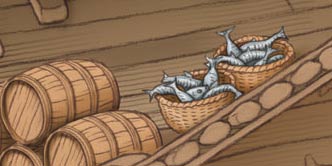
Fish
These fish were big salted cod, which would have been cut up and boiled to make fish stew. These fish would have been nearly 1 metre long, and their heads had been cut off.
Recent study of the fish bones shows that they were caught near Newfoundland, off the coast of Canada!
At least one man on the Mary Rose caught his own fresh fish. We found fishing gear in one of the wooden chests. There were wooden handlines and floats made from cork and willow, and a lead weight. There was also a disgorger – a tool for getting the hook out of the fish – in the same chest.
Fruit and vegetables
Most of the crew of the Mary Rose would not have eaten fresh fruit and vegetables on board the ship.
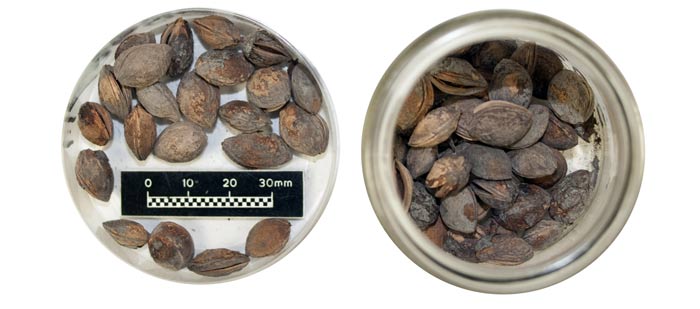
Just about the only fruit we found on the wreck was a basket full of hundreds of plum stones. We don’t know for certain whether these were from fresh plums or dried ones (prunes). These plums may well have belonged to one of the officers.
We also found apple pips and cherry stones, and crew’s rations included dried peas. They weren’t getting their ‘five-a-day’, but their diet was probably better than you might think!
Drink on the Mary Rose
In Tudor times water often wasn’t safe to drink. Milk was usually made into butter or cheese, and fruit juice wouldn’t keep for long. The English hadn’t discovered tea and coffee yet, so everybody drank beer. Even children drank beer, though it wasn’t as strong as beer today!
Beer
The sailors on the Mary Rose had a ration of a gallon of beer a day, that’s nearly four litres!
Beer was a very important part of the sailors’ diet. It contains lots of calories and is a good source of vitamin B.
The navy needed to buy huge amounts of beer to keep the ships’ crews happy and healthy; it was much safer to drink than water because the brewing process killed most of the germs, not that they knew why at the time!
A lot of the navy’s beer was made in royal breweries. In 1525 there were at least five royal breweries in Portsmouth, called the Rose, Lyon, Dragon, Whiteharte and the Ankre (Anchor).
Wine
Wine was only drunk by wealthier people in Henry VIII’s time.
The officers on the Mary Rose drank wine as well as beer.
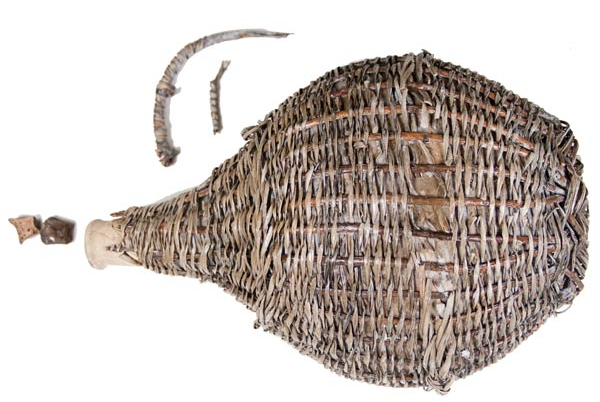
Most wine came from France, but strong, sweet wine from the Mediterranean was also very popular.
Related artefacts
Cooking pot
Used to cook meat for the officers, rather than the ordinary crew.